
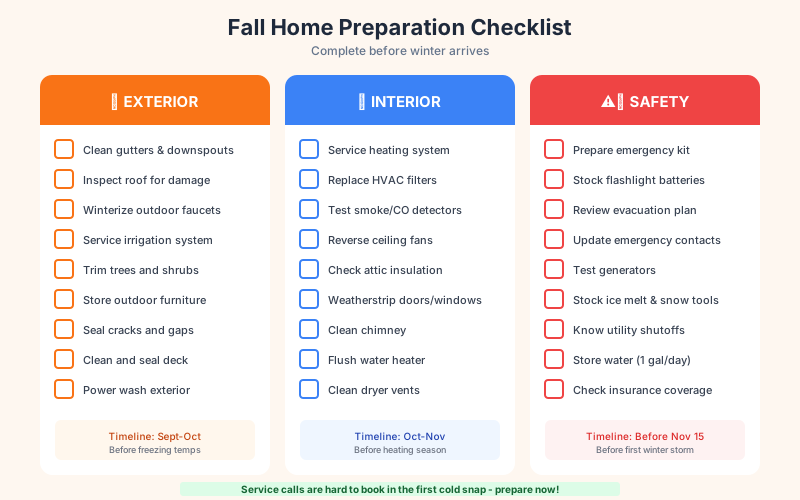
Fall maintenance is a race against two dates: the first hard freeze, and the week every furnace company in town gets busy. Work backward from those. Book the professionals in September, do the outdoor work while it is still warm enough for caulk and paint to cure, and finish anything involving water before the ground freezes.
This page covers the fall jobs outside and around the house. For protecting pipes, sealing air leaks, and preparing for outages, see our winterizing guide.
Fall tasks by deadline
| When | Task | Why then |
|---|---|---|
| Early fall | Book furnace or heat pump service | Appointments fill once the first cold night arrives |
| Early fall | Book a chimney inspection if you burn wood | Sweeps are busiest in October and November |
| Early fall | Exterior caulking, painting, and wood repair | Most caulks and paints need mild temperatures to cure. Check the label |
| Early fall | Aerate and overseed cool-season lawns | Seed needs several weeks of growth before frost |
| Mid-fall | Inspect the roof and flashing | Safer before ice, and roofers can still make repairs |
| Mid-fall | Trim dead or overhanging limbs | Snow and ice bring down weak branches |
| After leaf drop | Clean gutters and downspouts | Cleaning earlier means doing it twice |
| Before first freeze | Disconnect hoses, shut off and drain outdoor faucets | Water left in the line freezes and splits the pipe |
| Before first freeze | Blow out the irrigation system | The same reason, at a higher repair cost |
| Before first snow | Service the snow blower, stock ice melt, store furniture | You will not want to do it in a storm |
| When clocks change | Test smoke and carbon monoxide alarms | An easy date to remember |
Exterior Fall Maintenance
Roof and Gutter System
Your roof is your first defense against winter weather:
Roof Inspection
- Check for damaged, loose, or missing shingles
- Inspect flashing around chimneys and vents
- Look for signs of sagging or water damage
- Clear debris from valleys and flat sections
- Check attic for daylight or water stains
Gutter Maintenance Critical before winter ice and snow:
- Clean thoroughly after leaves fall
- Check slope for proper drainage
- Secure loose sections to prevent ice damage
- Install gutter guards to reduce spring cleaning
- Ensure downspouts direct water away from foundation
Pro Tip: Schedule professional roof inspection every 3-5 years or after severe storms.
Foundation and Exterior Walls
Foundation Check
- Inspect for cracks wider than 1/8 inch
- Check grade slopes away from house
- Clear window wells of debris
- Ensure sump pump works properly
- Look for signs of water intrusion
Exterior Maintenance
- Touch up paint before winter
- Caulk gaps around windows and doors
- Check siding for damage
- Clean and seal deck/patio
- Power wash exterior surfaces
Trees and Landscaping
Tree Care
- Trim branches near house and power lines
- Remove dead or diseased trees
- Prune after leaves fall
- Protect young trees from winter damage
- Clear gutters of seeds and leaves
Lawn Preparation
- Final mowing at 2-2.5 inches
- Aerate compacted areas
- Overseed bare patches
- Apply fall fertilizer
- Rake leaves regularly
Garden Winterization
- Harvest remaining vegetables
- Plant spring bulbs
- Mulch perennial beds
- Clean and store garden tools
- Drain and store hoses
Heating System Preparation
Furnace Maintenance
Don't wait for the first cold snap:
DIY Tasks
- Replace furnace filter (monthly during heating season)
- Clear area around furnace
- Test thermostat operation
- Check and clean vents
- Vacuum baseboard heaters
Professional Service ($100-200) Annual tune-up should include:
- Clean and inspect heat exchanger
- Check gas connections
- Test safety controls
- Lubricate moving parts
- Check carbon monoxide levels
Warning Signs
- Unusual noises
- Frequent cycling
- Uneven heating
- Yellow pilot light (should be blue)
- Increased heating bills
Fireplace and Chimney
Safety First
- Schedule professional cleaning ($150-300)
- Inspect chimney cap and screen
- Check damper operation
- Test glass doors seal
- Stock seasoned firewood
Wood-Burning Tips
- Burn only dry, seasoned hardwood
- Never burn treated wood
- Keep glass doors closed
- Install carbon monoxide detectors
- Have fire extinguisher nearby
Alternative Heating
Space Heaters
- Inspect cords for damage
- Clean dust from units
- Test safety features
- Review safe operation guidelines
- Never leave unattended
Pipes, windows, and doors
These are winterizing jobs, and we cover them step by step in the winterizing guide: shutting off outdoor faucets, insulating pipes in unheated spaces, sealing air leaks, and what to do if a pipe freezes. Sealing uncontrolled air leaks can save 10% to 20% on heating and cooling bills, according to the U.S. Department of Energy Energy Saver Guide (2022).
If the windows themselves are failing, with fogged glass, rot, or sashes that will not close, sealing only buys time. Price a replacement with the window replacement cost calculator.
Fall Safety Checks
Smoke and Carbon Monoxide Detectors
Monthly Testing Required
- Test all detectors
- Replace batteries (daylight saving time reminder)
- Check expiration dates (10 years for smoke, 5-7 for CO)
- Install detectors on every level
- Place CO detectors near bedrooms
Emergency Preparedness
Winter Storm Kit
- Flashlights and batteries
- Battery-powered radio
- First aid supplies
- Medications
- Non-perishable food
- Water (1 gallon/person/day)
- Blankets and warm clothing
- Alternative heat source (safe)
Home Emergency Info
- Utility shutoff locations
- Emergency contact numbers
- Insurance information
- Important documents (waterproof container)
- Evacuation plan
Indoor Fall Projects
Attic and Insulation
Inspection Tasks
- Check insulation depth (R-38 to R-60 recommended)
- Look for air leaks
- Inspect for pests or damage
- Ensure proper ventilation
- Check for moisture issues
Upgrade Opportunities
- Add insulation for energy savings
- Seal air leaks with foam
- Install attic stairs insulation
- Upgrade to radiant barrier
- Improve ventilation
HVAC System
Ductwork Maintenance
- Seal leaks with mastic or metal tape
- Insulate ducts in unconditioned spaces
- Clean registers and returns
- Check dampers operation
- Consider professional cleaning
Filter Management
- Stock up on filters for winter
- Set monthly replacement reminders
- Consider upgrading to HEPA
- Check filter direction
- Keep area around returns clear
Pest Prevention
Common Fall Invaders
Mice and Rats
- Seal holes with steel wool and caulk
- Store food in sealed containers
- Remove outdoor food sources
- Trim vegetation near house
- Set traps in problem areas
Insects
- Caulk cracks and crevices
- Install door sweeps
- Repair window screens
- Remove standing water
- Clear debris from foundation
Prevention Tips
- Inspect packages before bringing inside
- Store firewood away from house
- Keep garage organized and clean
- Address moisture issues
- Professional treatment if needed
Fall Cleaning Tasks
Outdoor Equipment
Summer Storage
- Clean and service lawn mower
- Drain fuel or add stabilizer
- Store cushions and umbrellas
- Clean and cover grill
- Winterize pool equipment
Winter Prep
- Service snow blower
- Check snow removal tools
- Stock ice melt
- Inspect extension cords
- Test generators
Deep Cleaning
Priority Areas
- Dryer vents: Prevent fires
- Range hood: Remove grease buildup
- Refrigerator coils: Improve efficiency
- Ceiling fans: Reverse direction
- Light fixtures: Maximum brightness
Budget and Timeline
Fall Maintenance Budget
DIY Costs
- Weatherstripping: $100-200
- Gutter cleaning: $50-100
- Filters and supplies: $50-100
- Caulk and sealants: $50-75
- Total DIY: $250-475
Professional Services
- HVAC tune-up: $100-200
- Chimney cleaning: $150-300
- Gutter cleaning: $150-250
- Tree trimming: $200-500
- Total Professional: $600-1,250
Recommended Timeline
Early Fall (September)
- Schedule professional services
- Exterior painting projects
- Deck and patio maintenance
- Tree trimming
Mid Fall (October)
- Gutter cleaning
- Heating system service
- Weatherization projects
- Lawn care
Late Fall (November)
- Final preparations
- Emergency kit check
- Indoor projects
- Holiday prep
Final Fall Checklist
Print and use this comprehensive list:
Exterior
- Clean gutters and downspouts
- Inspect roof
- Winterize outdoor faucets
- Service irrigation system
- Trim trees and shrubs
- Store outdoor furniture
- Seal cracks and gaps
Interior
- Service heating system
- Replace filters
- Test detectors
- Reverse ceiling fans
- Check insulation
- Weatherstrip doors/windows
- Clean chimney
Safety
- Prepare emergency kit
- Check flashlights
- Review evacuation plan
- Update emergency contacts
- Test generators
- Stock winter supplies
If something is near the end of its life
Fall is the last comfortable time to replace a roof or a heating system on your own schedule. A furnace that fails in January is replaced at emergency speed with whatever is in stock. If yours is past 15 years old, get a quote now and know the number: a furnace and air conditioner together typically run $9,200 to $16,200, and an asphalt shingle roof $11,100 to $22,900. Removing a dead tree before it falls costs far less than after: about $570 to $2,150 for a medium tree with its stump.
For the rest of the year, see the seasonal maintenance checklist.