
The New Homeowner's First 30 Days: Complete Checklist (Don't Miss These Critical Tasks)
Congratulations! You just bought your first home. Between the excitement of moving in, unpacking boxes, and decorating, there are critical tasks that new homeowners often miss in their first 30 days—tasks that could cost you thousands of dollars and years of frustration if overlooked.
I learned this the hard way.
The $8,200 Mistake I Made in My First Week
When my wife and I bought our first home in 2019, we were so focused on furniture placement and paint colors that we completely ignored the mundane stuff. We didn't photograph the home's condition before moving in, never documented the appliance serial numbers, and forgot to test major systems.
Three months later, our HVAC system failed. The home warranty company denied our claim because we couldn't prove the system was functioning when we bought the house. Cost: $8,200 out of pocket.
That expensive lesson taught me that the first 30 days as a homeowner are the most critical—not just for settling in, but for protecting your investment and setting up systems that will save you time and money for years to come.
Why the First 30 Days Are Make-or-Break
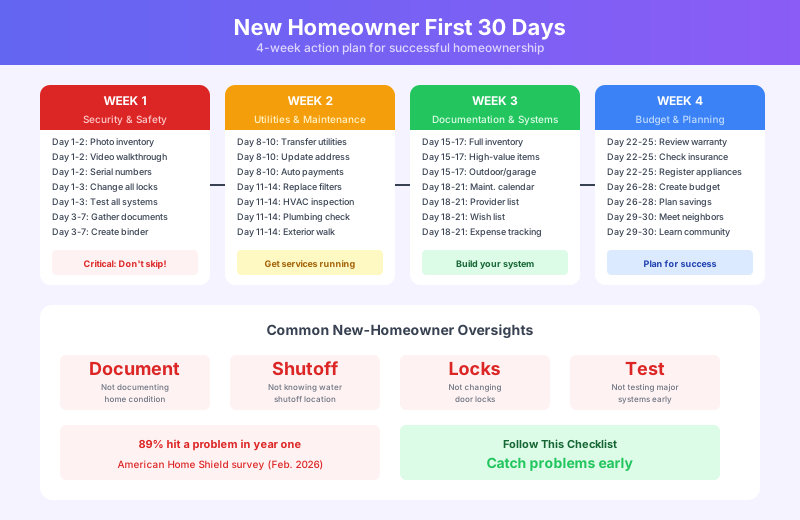
Problems show up fast. In a February 2026 American Home Shield survey of 1,004 homeowners, 89% said they ran into at least one problem with their home in the first year. The oversights that make those problems more expensive are predictable:
- Not documenting the home's condition in the first week, which leaves no proof for warranty or insurance disputes
- Not testing major systems (HVAC, water heater, appliances) early
- Not changing door locks right away (security risk)
- Not knowing where the main water shutoff is (critical in a leak)
- Not starting a digital home record from day one
But here's the good news: with a structured 30-day plan, you can avoid these mistakes, protect your investment, and create a home management system that makes homeownership easier and more affordable.
The Complete 30-Day New Homeowner Checklist
I've broken this down into 4 weekly phases, each focusing on different priorities. Follow this timeline, and you'll have everything documented, all systems tested, and a comprehensive home management system in place.
Total time investment: 12-15 hours over 30 days Peace of mind: Priceless
🏠 Week 1: Security, Safety & Critical Documentation
Priority: Secure your home and document its initial condition before moving in
Day 1-2: Before You Move In (Critical Window)
Why this matters: This is your only chance to photograph your home completely empty, document pre-existing damage, and establish baseline condition for insurance and warranty claims.
✅ Pre-Move-In Documentation Checklist:
-
Complete Photo Inventory (Empty Home)
- Photograph EVERY room from multiple angles
- Capture all walls, ceilings, floors in detail
- Document any pre-existing damage (scratches, stains, cracks)
- Photograph inside all cabinets, closets, drawers
- Take close-ups of any issues for insurance/warranty records
- Time: 1-2 hours
- Why: Establishes baseline condition for future insurance claims and prevents disputes with previous owners
-
Video Walkthrough
- Record a complete video walkthrough of the entire property
- Narrate what you're seeing ("Here's a water stain on the ceiling in the master bedroom")
- Test and record ALL lights, switches, outlets working
- Document exterior condition, roof, siding, driveway
- Time: 30-45 minutes
- Why: Video proof is invaluable for insurance claims and warranty disputes
-
Document All Serial Numbers & Model Numbers
- Appliances: Refrigerator, stove, oven, dishwasher, microwave, washer, dryer
- HVAC System: Indoor and outdoor units
- Water Heater: Model, capacity, installation date
- Garage Door Opener: Model and serial number
- Smart Home Devices: Thermostats, security systems, smart locks
- Take photos of the manufacturer labels (they fade over time)
- Time: 45-60 minutes
- Why: Required for warranty claims, service calls, and insurance riders
-
Test All Major Systems
- HVAC: Run both heat and AC for 15-30 minutes
- Plumbing: Run all faucets, flush all toilets, check for leaks
- Electrical: Test all outlets, switches, GFCI breakers
- Garage Door: Test opener, safety sensors, manual release
- Smoke & CO Detectors: Test all units, note battery replacement dates
- Water Heater: Check for leaks, note temperature setting
- Document everything that works (and what doesn't) with photos/videos
- Time: 1-2 hours
- Why: Many home warranties have a waiting period before coverage starts and exclude pre-existing conditions, so proof that systems worked when you moved in matters
💡 Pro Tip: Start your digital home record on day one, keeping all photos, serial numbers, and test results in one secure location (this is what MyHomePlatform's Document Vault is built for).
→ Learn more about the Digital Home Record
Day 1-3: Security Essentials
Why this matters: You have no idea how many copies of your house keys are floating around from the previous owner.
✅ Home Security Checklist:
-
Change ALL Locks Immediately ❗
- Front door, back door, garage door, gate locks
- Consider upgrading to smart locks for keyless entry
- Cost: $150-$400 (DIY) or $250-$600 (locksmith)
- Why: Previous owners may have given keys to neighbors, contractors, relatives
-
Secure Garage & Gates
- Change garage door opener codes
- Replace gate combinations/keys
- Ensure garage door safety sensors are functioning
-
Security System Setup
- If the home has an existing system, change the master code
- Contact the security company to transfer service to your name
- If no system, consider installing DIY options (Ring, SimpliSafe, etc.)
- Document all alarm codes and system info in your Digital Home Record
-
Emergency Preparedness
- Locate and test the main water shutoff valve
- Find the main electrical panel and label circuits
- Locate gas shutoff valve (if applicable)
- Purchase and install fire extinguishers (kitchen, garage, upstairs)
- Test all smoke detectors and carbon monoxide detectors
- Create and print an emergency contact sheet (plumber, electrician, HVAC, poison control, etc.)
🎯 Action Item: Download our Complete 30-Day New Homeowner Checklist (free PDF) with all tasks, timelines, and cost estimates.
Day 3-7: Documentation & Organization
✅ Document Collection & Organization:
-
Gather All Closing & Purchase Documents
- Closing disclosure
- Title and deed
- Home inspection report
- Appraisal report
- Survey and plat map
- HOA documents (if applicable)
- Warranties and guarantees
- Manuals for appliances and systems
- Store securely: Both physical and digital copies
-
Create a Home Maintenance Binder (Physical Backup)
- Section 1: Purchase & Closing Documents
- Section 2: Warranties & Manuals
- Section 3: Maintenance Records (from previous owner, if available)
- Section 4: Contact Information (utilities, contractors, HOA)
- Section 5: Paint Colors & Materials (for future touch-ups)
- Section 6: Renovation Ideas & Plans
-
Digital Backup System
- Scan ALL paper documents
- Upload to secure cloud storage or MyHomePlatform's Document Vault
- Organize in folders: Purchase, Warranties, Maintenance, Receipts, Renovation
- Why: Paper degrades; having digital backups protects your records—our home documentation guide shows how to organize the full system
-
Inventory High-Value Items
- Create a home inventory for insurance purposes
- Photograph valuables, electronics, furniture, jewelry
- Document serial numbers, purchase receipts, appraisals
- Store in Home Inventory System
- Why: Required for insurance claims if disaster strikes
🔧 Week 2: Utilities, Services & Immediate Maintenance
Priority: Transfer services, establish service providers, and handle urgent maintenance
Day 8-10: Utility Transfers & Account Setup
✅ Utilities & Services Checklist:
-
Transfer or Set Up Utilities
- Electricity: Transfer service to your name (if not done at closing)
- Gas: Contact gas company for transfer
- Water/Sewer: Transfer account, confirm billing address
- Trash/Recycling: Set up service, confirm pickup days
- Internet/Cable: Schedule installation or transfer service
- Security System: Transfer monitoring service
- Document all account numbers, login credentials, and payment due dates
-
Update Your Address
- USPS address change (online or at post office)
- DMV (driver's license, vehicle registration)
- Employer HR department
- Banks and credit card companies
- Insurance providers (auto, life, health)
- IRS and state tax agencies
- Voter registration
- Magazine subscriptions and online accounts
-
Set Up Automatic Payments
- Mortgage (if not already set up)
- Property taxes (if not escrowed)
- HOA fees
- Utilities
- Home insurance premium
- Pro Tip: Use MyHomePlatform's Smart Budget Estimator to manage all payment due dates in one place
Day 11-14: Immediate Maintenance Tasks
✅ Critical Maintenance Checklist:
-
HVAC System
- Replace all air filters (often neglected by previous owners)
- Schedule professional HVAC inspection ($100-$150)
- Document system age, type, capacity
- Set up maintenance reminders for filter changes (every 1-3 months)
- Cost: $20-$50 for filters, $100-$150 for inspection
- Why: Dirty filters restrict airflow and make the system work harder
-
Water Heater
- Drain sediment from tank (if traditional water heater)
- Check for leaks around base and connections
- Test pressure relief valve
- Note manufacture date (typically on sticker)
- Lifespan: 8-12 years (traditional), 20+ years (tankless)
- Cost: DIY free, professional flush $100-$150
-
Plumbing Check
- Check under all sinks for leaks
- Inspect washing machine hoses (replace if rubber—upgrade to braided steel)
- Test toilet fill valves and flappers
- Check water pressure (should be 45-65 PSI)
- Locate and test main water shutoff
- Cost: $15-$50 for hose replacement (DIY)
-
Electrical Safety
- Test all GFCI outlets (bathrooms, kitchen, exterior)
- Check outdoor electrical outlets and covers
- Inspect electrical panel for loose connections, rust, or damage
- Label circuit breakers if not already done
- If anything looks concerning, hire a licensed electrician
-
Exterior Inspection
- Walk the perimeter of your home
- Check gutters and downspouts for clogs
- Look for cracks in foundation or driveway
- Inspect siding for damage or rot
- Check caulking around windows and doors
- Look for signs of pests or rodents
-
Roof Inspection
- Inspect roof from ground level (use binoculars if needed)
- Look for missing, damaged, or curled shingles
- Check for moss, algae, or debris buildup
- Schedule professional inspection if roof is older than 10 years
- Cost: Professional inspection $150-$400
🔥 Emergency Prep: Keep your Emergency Home Maintenance Response Guide handy—it covers what to do when things go wrong at 2 AM.
🏡 Week 3: Deep Dive Documentation & System Setup
Priority: Complete comprehensive documentation and establish long-term management systems
Day 15-17: Complete Home Inventory
✅ Comprehensive Home Inventory Checklist:
-
Room-by-Room Inventory
- Photograph every room (all 4 walls, ceiling, floor)
- Document furniture, electronics, appliances, decor
- Record serial numbers for TVs, computers, gaming systems
- Photograph jewelry, collectibles, art, instruments
- Note purchase dates and values (use receipts if available)
- Time: 2-3 hours for average home
- Why: Insurance claim proof if fire, flood, or theft occurs
-
High-Value Item Documentation
- Create separate detailed records for items worth $1,000+
- Include photos from multiple angles
- Attach purchase receipts or appraisals
- Note serial numbers and model numbers
- Consider separate insurance riders for valuable items (jewelry, art, instruments)
- Use: MyHomePlatform's Home Inventory System to organize and back up automatically
-
Outdoor & Garage Inventory
- Lawn equipment (mower, trimmer, blower)
- Tools and hardware
- Bicycles and sports equipment
- Outdoor furniture and grills
- Seasonal decorations
- Garage door openers and remotes
→ Download Free Room-by-Room Inventory Worksheet
Day 18-21: Establish Home Management Systems
✅ Home Management Setup Checklist:
-
Create Maintenance Calendar
- Set up seasonal maintenance reminders:
- Monthly: HVAC filter changes, test smoke/CO detectors
- Quarterly: Gutter cleaning, HVAC system check
- Semi-Annual: Water heater flush, garage door maintenance
- Annual: Roof inspection, chimney cleaning, septic pumping
- Use MyHomePlatform's Maintenance Calendar to automate reminders
- Why: Preventive maintenance is usually far cheaper than emergency repairs
- Set up seasonal maintenance reminders:
-
Build Your Service Provider Directory
- Plumber: Get 2-3 referrals, save contact info
- Electrician: Licensed and insured professionals
- HVAC Technician: Schedule annual service contract
- Handyman: For small repairs and maintenance
- Landscaping: If you don't plan to DIY
- Pest Control: Preventive quarterly service
- Save all contacts in MyHomePlatform's Service Provider Directory
-
Create Home Improvement Wish List
- Prioritize projects (urgent vs. nice-to-have)
- Estimate costs and timelines
- Research contractors and get quotes
- Budget for renovations and upgrades
- Track: Use Renovation ROI Calculator to prioritize improvements
-
Set Up Financial Tracking
- Create separate savings account for home maintenance
- Common rule of thumb: Set aside 1-3% of home value annually
- For a $300K home: $3,000-$9,000/year = $250-$750/month
- Track all home-related expenses (repairs, improvements, utilities)
- Use Home Expense Tracker to categorize spending
💰 Week 4: Budget, Warranties & Future Planning
Priority: Understand costs, activate warranties, and plan for long-term success
Day 22-25: Warranties & Insurance
✅ Warranty & Insurance Checklist:
-
Review Home Warranty Coverage
- Understand what's covered and what's not
- Note deductibles and service call fees
- Review exclusions (especially for pre-existing conditions)
- File any claims for issues discovered in first 30 days
- Critical: Report any system failures within warranty window
-
Review Homeowners Insurance Policy
- Confirm coverage limits are adequate
- Verify replacement cost coverage (not actual cash value)
- Consider increasing coverage if needed
- Add valuable items with riders/endorsements
- Review deductibles and ensure you can afford them
- Bundle with auto insurance for discounts
- Ask what multi-policy discount your insurer offers
-
Understand Home Warranty vs. Insurance
- Home Warranty: Covers mechanical systems and appliances (HVAC, plumbing, electrical, appliances)
- Homeowners Insurance: Covers structure, contents, liability, and disasters
- They're complementary, not interchangeable
-
Register Appliance Warranties
- Register all appliances with manufacturers
- Note warranty expiration dates in your digital home record
- Keep all warranty documents in Document Vault
- Set reminders 60 days before warranties expire
Day 26-28: Financial Planning & Budgeting
✅ Financial Planning Checklist:
-
Create Home Maintenance Budget
- Emergency Fund: A common rule of thumb is 3-6 months of mortgage payments
- Maintenance Reserve: A common rule of thumb is 1-3% of home value annually
- Utilities: Budget actual monthly costs
- Planned Improvements: Save for renovations
- Download Free New Homeowner Budget Worksheet
-
Understand True Cost of Homeownership
- Mortgage (principal + interest)
- Property taxes
- Homeowners insurance
- PMI (if less than 20% down)
- HOA fees (if applicable)
- Utilities (electric, gas, water, trash, internet)
- Maintenance and repairs (a common rule of thumb is 1-3% of home value)
- Landscaping and yard care
- Pest control
- Total: A 2025 Zillow and Thumbtack analysis put typical yearly maintenance, insurance and property tax costs at $15,979, about $1,325 a month on top of the mortgage payment
-
Plan for Major Replacements
- HVAC System: $5,000-$10,000 every 15-20 years
- Roof: $5,000-$15,000 every 20-30 years
- Water Heater: $800-$2,500 every 10-15 years
- Appliances: $500-$2,000 each every 10-15 years
- Windows: $300-$1,000 each every 20-30 years
- Set aside: $2,000-$5,000 annually for eventual replacements
-
Tax Benefits & Deductions
- Mortgage interest deduction (on up to $750,000 of acquisition debt, per IRS Publication 936 for 2025)
- Property tax deduction (subject to the state and local tax (SALT) deduction cap, which changed under 2025 tax law)
- Points paid at closing (often deductible)
- Home office deduction (if applicable)
- Energy-efficient upgrades: the federal 25C and 25D credits ended after December 31, 2025 (IRS); look for state and utility rebates instead
- Consult a tax professional to maximize deductions
Day 29-30: Community & Long-Term Success
✅ Community Integration Checklist:
-
Meet Your Neighbors
- Introduce yourself to immediate neighbors
- Exchange contact information for emergencies
- Learn about neighborhood norms and expectations
- Join local Facebook groups or Nextdoor
- Attend HOA meetings (if applicable)
-
Understand Local Services
- Trash and recycling pickup schedule
- Street sweeping days (if applicable)
- Snow removal policies (in winter climates)
- Local emergency services and nearest hospital
- Nearby parks, schools, libraries, community centers
-
Research Local Contractors & Services
- Read reviews for local plumbers, electricians, HVAC techs
- Get recommendations from neighbors
- Keep a list of 24/7 emergency services
- Identify nearby hardware stores and home improvement centers
-
Join Local Resources
- Homeowner associations or community groups
- Online forums (Reddit r/homeowners, neighborhood Facebook groups)
- Local home improvement classes at hardware stores
🎯 Your 30-Day Success Summary
By completing this checklist, you've accomplished what many new homeowners never get around to:
✅ Documented your home's condition (protects warranties and insurance claims) ✅ Secured your property (locks changed, systems tested) ✅ Tested all major systems (caught issues before they become expensive) ✅ Created a comprehensive home inventory (insurance claim protection) ✅ Set up maintenance calendar (catches many common problems before they become emergencies) ✅ Built your service provider network (faster response to problems) ✅ Established financial tracking (understand true cost of ownership) ✅ Activated all warranties (maximize coverage and protection)
💡 Common Mistakes to Avoid in Your First 30 Days
❌ Don't Make These Costly Errors:
-
Waiting to Change Locks
- Previous owners could have given copies to anyone
- Security breach risk isn't worth saving $200
-
Skipping the Empty-Home Photo Documentation
- You can NEVER get this opportunity back
- Critical for warranty and insurance disputes
-
Not Testing All Systems Before 30 Days
- Home warranties exclude pre-existing conditions, and you need proof of when a problem started
- Without that proof, a major system repair can land entirely on you
-
Forgetting to Register Appliances
- Registration makes recall notices and warranty claims easier
- Some warranties offer extended coverage for registering
-
Not Creating a Maintenance Fund
- Something will likely break: in a 2026 American Home Shield survey, 89% of homeowners reported at least one problem in their first year
- The most common was needing to replace an appliance
-
Ignoring Small Issues
- Small leaks become major water damage
- Electrical issues can cause fires
- Address problems immediately
-
Doing Major Renovations Immediately
- Live in your home for 6-12 months first
- You'll discover what you actually need vs. want
- Avoid costly renovation regrets
🚀 What Happens After 30 Days?
Your work isn't done (sorry!), but you've built a foundation for successful homeownership.
Month 2-3: Establish Routines
- Monthly maintenance checks (filters, batteries, systems)
- Review and adjust your budget based on actual costs
- Start tackling your home improvement wish list
- Build your emergency fund to 3-6 months of expenses
Month 4-12: Preventive Maintenance
- Schedule seasonal maintenance (HVAC, gutters, etc.)
- Complete outdoor projects before winter
- Review insurance coverage annually
- Update home inventory as you acquire new items
Year 2+: Long-Term Planning
- Major renovation planning (kitchen, bathrooms, etc.)
- Consider energy efficiency upgrades
- Evaluate refinancing opportunities
- Build equity and wealth through homeownership
📊 First-Year Homeownership Costs (Rough Ranges)
These are rough planning ranges, not survey data. Your costs depend on your home's age, size, location and condition:
| Expense Category | Rough Annual Range | |------------------|--------------------| | Routine Maintenance | $1,200-$2,400 | | Unexpected Repairs | $1,800-$4,500 | | Appliance Replacement | $500-$2,000 | | HVAC Emergency | $300-$8,500 | | Plumbing Issues | $150-$3,200 | | Electrical Problems | $100-$2,500 | | Pest Control | $300-$1,200 | | Landscaping | $500-$3,000 | | HOA Fees | $1,200-$6,000 | | Property Taxes | $2,000-$10,000+ | | Insurance Premium | $1,000-$3,500 |
For a national benchmark, the 2025 Zillow and Thumbtack analysis estimated that the typical U.S. homeowner spends $10,946 a year on maintenance, $2,003 on homeowners insurance and $3,030 on property taxes, for $15,979 in total.
😰 Overwhelming? That's why proper planning and documentation in your first 30 days is critical—it helps you avoid surprise costs and catch issues before they become expensive emergencies.
🎁 Free Resources to Help You Succeed
We've created comprehensive resources to make your first 30 days easier:
📥 Download These Free Tools:
-
Complete 30-Day New Homeowner Checklist (PDF)
- Printable daily task list
- Space for notes and completion dates
- Estimated time and cost for each task
-
New Homeowner Budget Worksheet (Excel)
- Pre-filled expense categories
- Monthly and annual tracking
- Budget vs. actual comparison
-
Home Systems Documentation Template (Excel)
- Track all appliances, systems, and components
- Serial numbers, model numbers, installation dates
- Maintenance schedules and warranty expiration dates
-
Room-by-Room Inventory Worksheet (Excel)
- Complete inventory template
- Insurance claim preparation
- High-value item tracking
🏆 Make Homeownership Easier with MyHomePlatform
Your first 30 days set the tone for your entire homeownership experience. Instead of juggling spreadsheets, paper binders, and random photos on your phone, centralize everything in one secure digital platform.
What MyHomePlatform Offers:
- Store photos, documents, warranties, receipts
- Access anywhere, anytime
- Photograph and catalog everything you own
- Automatic valuation estimates
- Insurance claim ready
- Automated reminders for routine tasks
- Track completed maintenance
- Prevent costly emergencies
- Save contractor contact info
- Track service history and costs
- Share recommendations with neighbors
- Monitor home expenses
- Budget for maintenance and repairs
- Track property value growth
- Warranty expiration reminders
- Maintenance schedule notifications
- Bill payment alerts
🎯 Keep Your Digital Home Record in One Place
MyHomePlatform is being built to hold everything this checklist helps you collect.
→ Learn more about the Digital Home Record
❓ Frequently Asked Questions
Q: Can I really complete everything in this checklist in 30 days?
A: Yes! The checklist is designed to spread tasks across 30 days (12-15 hours total). You don't have to do everything at once. The most critical tasks (security, documentation, system testing) are in Week 1.
Q: What if I already moved in and missed the empty-home documentation?
A: Document everything NOW. While it's best to photograph before moving in, it's never too late to start. Focus on appliance serial numbers, system testing, and creating your home inventory.
Q: How much should I budget for maintenance in my first year?
A: Plan for 1-3% of your home's value annually. For a $300K home, that's $3,000-$9,000/year. That's a common rule of thumb, not a guarantee: older homes need more and newer homes need less.
Q: Do I really need to change all the locks?
A: Yes, immediately. You have no idea how many key copies exist or who has them. Previous owners may have given keys to dog walkers, housekeepers, contractors, neighbors, or relatives. It's a $200-$400 investment in security and peace of mind.
Q: What's the most important thing to document?
A: Serial numbers and proof that systems worked when you bought the home. This protects you from warranty denials and insurance claim disputes. Take photos/videos of everything working within your first week.
Q: Should I hire professionals for everything or DIY?
A: Know your limits. Simple tasks (changing air filters, testing outlets) are easy DIY. But plumbing, electrical, and HVAC work should be done by licensed professionals. A $150 service call is cheaper than a $5,000 mistake.
Q: How do I prioritize if I can't afford to do everything at once?
A: Focus on safety and protection first:
- Change locks (security)
- Test smoke/CO detectors (safety)
- Document condition and serial numbers (financial protection)
- Test major systems (catch issues before warranty expires)
Everything else can wait if necessary.
Q: What if I discover a problem after 30 days?
A: It depends on your home warranty and insurance. Many home warranties exclude pre-existing conditions, so you may need to show the problem started after coverage began. This is why thorough testing in Week 1-2 is critical. Document everything you test and when you test it.
Q: How often should I update my home inventory?
A: Update your inventory:
- Immediately: After purchasing high-value items ($500+)
- Quarterly: For general updates and photos
- Annually: Complete review and re-photography
- Before travel: Quick photo update before extended vacations
Q: How does this checklist save money?
A: Mainly in four ways:
- Catching HVAC and plumbing issues early, before a small fix becomes a replacement
- Proper documentation for warranty claims, so a claim isn't denied for lack of proof
- Preventive maintenance instead of emergency repairs, which avoids rush pricing and secondary damage
- Insurance claim proof, so you can show what you owned and what condition the home was in if disaster strikes
How much you save depends on what goes wrong, which no checklist can predict.
📚 Related Resources
Want to dive deeper? Check out these comprehensive guides:
- The Ultimate Home Maintenance Schedule: Complete Guide for Every Season
- How to Document Your Home for Insurance Claims (Before Disaster Strikes)
- How a Digital Home Record Can Help You Sell: A Worked Example
🎉 Congratulations on Your New Home!
Homeownership is one of life's greatest adventures. Yes, there's a learning curve and occasional stress, but with proper preparation and systems in place, you'll build equity, create memories, and enjoy the freedom that comes with owning your own space.
Remember: The work you do in your first 30 days sets the foundation for years of successful, less stressful homeownership.
You've got this! 🏠
🚀 Next Steps:
Questions? Drop a comment below or contact our team—we're here to help you succeed! 💪