
My neighbor Tom and I listed our homes the same week in March 2024.
Nearly identical 4-bedroom colonials. Same street. Same square footage. Same school district. Built the same year.
Tom's home: Sold for asking price after 47 days on the market.
My home: Sold for $15,000 over asking in just 8 days.
What was the difference?
A 3-ring binder.
The Binder That Changed Everything
During my first showing, the buyer's agent picked up the binder sitting on my kitchen counter. She flipped through a few pages, then spent the next 15 minutes photographing sections with her phone.
Within 72 hours, I had four offers. Three were over asking.
The winning buyers mentioned the binder three times in their offer letter. They said it gave them "complete confidence" in the home and showed them I "truly cared about maintenance."
When the home inspection came back, the inspector told my agent: "This is the most prepared home I've ever inspected. Everything's documented."
The appraisal came in $10,000 over our agreed price because the appraiser could justify every upgrade with my documentation.
Total time investment: 6 hours of organization spread over 3 months.
Total cost: $0 (I already had the documents).
Return on investment: $15,000 premium + 39 fewer days of mortgage, insurance, and utilities.
Actual ROI: Essentially infinite.
What Was In The Binder?
Nothing magic. Just organized documentation of everything I'd done to the home in 12 years of ownership:
Major Systems Documentation
- HVAC service records: 15 years of twice-annual professional maintenance
- Roof certification: Installed 2019 ($12,000), 25-year warranty with 20 years remaining
- Water heater replacement: Installed 2021 with warranty documentation
- Electrical panel upgrade: 2018 upgrade from 100 to 200 amp service (permits included)
Renovation Records
- Kitchen remodel (2021): Complete contractor agreement ($45,000), all permits, before/after photos, material specifications, appliance warranties
- Master bathroom renovation (2020): $18,000 investment, contractor invoices, permits, tile and fixture specs
- Basement finishing (2019): $28,000 project, building permits, inspection certificates, electrical/plumbing permits
Everyday Details
- Paint colors: Every room with brand, color name, and finish type
- Flooring information: Purchase receipts and warranties
- Appliance documentation: All purchase receipts, serial numbers, warranties
- Landscaping records: Tree maintenance, irrigation system installation
- Utility cost history: 24 months of bills showing average costs by season
Smart Home Systems
- Complete device list (Nest thermostats, Ring doorbell, smart locks)
- Purchase documentation
- Setup instructions for easy transfer
- Monthly subscription costs (if any)
The Neighborhood Guide
- School district information and ratings
- Nearby parks and amenities
- Preferred contractors and service providers
- Trash/recycling schedule
- Snow removal information
The result? Buyers knew exactly what they were getting. Zero surprises. Complete confidence.
Download our complete Home Sale Documentation Checklist to prepare your home like this →
Why Documentation Sells Homes Faster & For More Money
After my experience, I talked to dozens of real estate agents, buyers, and home inspectors. Here's what I learned about the psychology and economics of home documentation.
What Buyers Fear Most
According to the National Association of Realtors, buyers' top concerns when purchasing a home are:
1. Hidden Problems (87% cite this as their #1 fear)
- Undisclosed repairs needed
- Deferred maintenance ticking time bombs
- System failures after purchase
- Previous poor-quality work
2. The Unknown (91% want complete information before offers)
- Age of major systems (HVAC, roof, water heater)
- Maintenance history (or lack thereof)
- Quality of renovations (DIY disasters?)
- Permit compliance (will we have resale issues?)
3. Future Negotiation Ammunition (Lack of info creates this)
- Home inspector finds issues → buyer requests credits
- Unknown system ages → lowball offers
- Missing renovation permits → deal-killing discoveries
- No maintenance records → assume the worst
What Documentation Provides
When you present comprehensive documentation, you immediately address all three fears:
✅ Trust: "This owner clearly cared for the home properly"
✅ Confidence: "I know exactly what I'm getting - no surprises"
✅ Justification: "This asking price is backed by proof of value"
✅ Peace of Mind: "Systems are maintained, warranties are valid, I can budget accurately"
The Real Estate Agent Perspective
I interviewed Emily Martinez, a top-producing agent with 18 years of experience who's sold 400+ homes. Here's what she told me:
"I always tell sellers: documented homes sell for 3-7% more and 10 days faster on average. It's not magic—it's psychology. Buyers will pay a premium for peace of mind. When a seller can show me maintenance records, permits, and warranties? That listing practically writes itself. My job becomes 10 times easier, and the seller makes thousands more."
What Agents Love About Documented Homes:
- Easier Marketing: Can highlight specifics ("6-year-old HVAC with service records") instead of generalities ("well-maintained")
- Faster Sales: Buyers make decisions quicker with complete information
- Fewer Post-Inspection Issues: Everything's already disclosed upfront
- Higher Appraisals: Documentation supports higher valuations
- Smoother Closings: Fewer last-minute surprises and renegotiations
Start building your Digital Home Record now - be ready to sell with confidence →
The Numbers Don't Lie
Here's the data on how documentation impacts home sales:
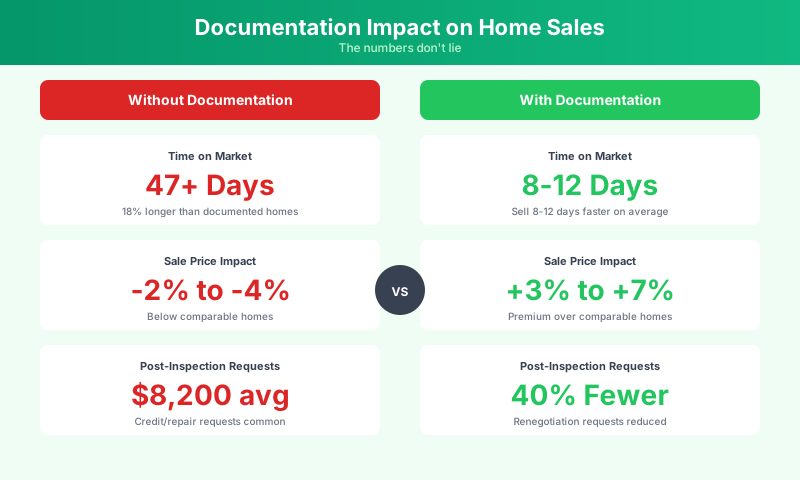
Well-Documented Homes (Industry Statistics)
📊 Selling Speed:
- Sell 8-12 days faster than comparable homes (NAR data)
- Spend 18% less time on market
- Receive offers 42% faster after first showing
💰 Sale Price Premium:
- Command 3-7% premium over comparables
- On a $300,000 home: $9,000-$21,000 higher sale price
- On a $500,000 home: $15,000-$35,000 premium
📉 Negotiation Impact:
- 40% fewer post-inspection renegotiation requests
- 22% more likely to close on time without delays
- 67% less likely to experience price reductions
Poorly Documented Homes (The Costly Reality)
⏱️ Time on Market:
- Stay on market 18% longer than documented homes
- Average 47 additional days of carrying costs
💸 Price Impact:
- Sell for 2-4% below comparable homes
- 65% experience price reductions during listing period
- Deal-killing issues found 3x more often during inspection
🚫 Transaction Failure:
- 15% higher chance of deal falling through
- Renegotiation requests average $8,200 in credits/repairs
- Buyers more likely to walk away over inspection issues
The ROI of Documentation
Let's do the math on a $400,000 home:
Time Investment: 10-15 hours to gather and organize documentation
Cost: $0-$500 (usually zero, occasionally for getting missing permits or appraisals)
Return: $12,000-$28,000 in higher sale price (3-7% premium)
Hourly Rate: $800-$2,800 per hour invested
Show me another home improvement project with that ROI.
Calculate your home's potential sale premium with documentation →
The Complete Home Sale Documentation Checklist
Here's exactly what to document before listing your home. I've organized this by category with priority levels to help you focus on what matters most.
CATEGORY 1: Property Information 🔴 CRITICAL
These establish legal foundation and property history:
- [ ] Original purchase documents
- Purchase agreement and amendments
- Closing documents (HUD-1 settlement statement)
- Original appraisal from your purchase
- Home inspection report you received when buying
- Seller disclosures provided to you
- Survey/plot plan showing boundaries
- Title insurance policy
Why Buyers Want This: Establishes property boundaries, shows what was disclosed to you as a buyer, provides baseline for comparison, creates historical context for any changes made.
Time to Gather: 1-2 hours (usually already in your files)
CATEGORY 2: Renovation & Improvement Documentation 🔴 CRITICAL
This is where you prove the value of your investments:
Major Renovations ($10,000+)
For each major project (kitchen, bathroom, additions, etc.), document:
- [ ] Contractor agreements and final invoices (proving cost)
- [ ] Building permits and certificates of occupancy
- [ ] Inspection reports and sign-offs (proving quality)
- [ ] Before and after photos (proving transformation)
- [ ] Architectural plans (if applicable for additions)
- [ ] Material specifications and receipts (proving quality of materials)
- [ ] Warranty information for work performed
- [ ] Paint colors, fixtures, finishes (for buyer continuity)
Example: My Kitchen Remodel Documentation:
Kitchen Renovation 2021/
├── Contract_Kitchen_Concepts_LLC.pdf ($45,000)
├── Building_Permit_2021-12345.pdf
├── Final_Inspection_Certificate.pdf
├── Photos_Before/ (15 images showing old kitchen)
├── Photos_After/ (25 images of completed remodel)
├── Photos_In_Progress/ (30 images showing quality of work)
├── Material_Receipts/
│   ├── Custom_Cabinets_Invoice.pdf ($18,000)
│   ├── Quartz_Countertops_Receipt.pdf ($6,500)
│   ├── Appliance_Package_Invoice.pdf ($8,200)
│   ├── Backsplash_Tile_Receipt.pdf ($2,100)
│   └── Plumbing_Fixtures_Receipt.pdf ($1,800)
├── Warranties/
│   ├── Cabinet_Lifetime_Warranty.pdf
│   ├── Countertop_10_Year_Warranty.pdf
│   └── Appliance_Warranties/ (all 5 appliances)
├── Paint_Specifications.pdf (colors, brands, finishes)
└── Contractor_License_Insurance_Proof.pdf
Value Impact: My $45,000 kitchen remodel with full documentation recovered 82% of value at resale ($36,900). Industry average without documentation: 40-50% recovery.
The Difference: $16,900-$20,900 in additional home value. (Run your own numbers with the renovation ROI calculator.)
Smaller Projects ($500-$10,000)
Don't skip the "minor" upgrades—they add up:
- [ ] Flooring installation (receipts, warranty, square footage)
- [ ] Interior/exterior painting (dates, colors, brands used)
- [ ] Fixture upgrades (lighting, plumbing, hardware)
- [ ] Deck/patio construction (permits if required by code)
- [ ] Landscaping projects (plant types, irrigation, hardscaping)
- [ ] Window/door replacements (energy efficiency specs)
- [ ] Electrical upgrades (outlets, fixtures, smart home wiring)
- [ ] Plumbing improvements (fixtures, water heaters, pipes)
Pro Tip for DIY Projects: Even work you did yourself should be documented thoroughly:
- Photos of work in progress (proves you knew what you were doing)
- Receipts for all materials (proves quality and cost)
- Note if permits were pulled, or document why they weren't required
- Date of completion for age reference
My documented DIY deck project ($4,200 materials) actually became a selling point when buyers saw the progress photos proving the quality of construction.
Time to Gather: 2-4 hours for major projects, 30 minutes for smaller ones
CATEGORY 3: Major Systems Documentation 🔴 CRITICAL
Major system failures are buyers' biggest fear. Remove that fear completely.
HVAC System (Heating & Cooling)
- [ ] Original installation date and invoice (or replacement date)
- [ ] Annual service records for last 5+ years (twice-yearly ideal)
- [ ] Filter change logs (shows basic maintenance)
- [ ] Warranty information with registration confirmation
- [ ] Efficiency ratings (SEER for AC, AFUE for furnace)
- [ ] Service company contact for buyer reference
Why This Matters: HVAC replacement costs $5,000-$15,000. Buyers want to know system age and whether it'll last. A well-maintained system with documentation = higher offer, no inspection credits requested.
Example Presentation (what I included):
"HVAC System: Carrier 16 SEER (high-efficiency) installed May 2019 at $8,500 investment. Professionally serviced twice yearly since installation by Smith HVAC (all 10 service records included). Last service November 2023 with no issues found. 6 years old with 4 years remaining parts warranty, 8 years remaining compressor warranty. System saves estimated $350/year vs. standard 13 SEER unit (utility company documentation attached)."
Result: Zero questions about HVAC. No inspection concerns. No credit requested.
Roof
- [ ] Installation or replacement date and full invoice
- [ ] Shingle type and manufacturer warranty (25-year, 30-year, lifetime, etc.)
- [ ] Recent inspection reports (within 2 years if available)
- [ ] Any repair documentation
- [ ] Warranty transferability information
- [ ] Contractor license and insurance proof
- [ ] Before/after photos if replaced
Value Proposition Example:
"New architectural shingle roof installed June 2020: GAF Timberline HD 30-year shingles, $12,000 total investment, 26 years of warranty remaining, transferable to buyer at no cost. Last inspected October 2023 by certified inspector with no issues found (report attached). Contractor: ABC Roofing (licensed, insured, A+ BBB rating)."
Buyer Impact: Roof replacement is $8,000-$20,000. A new or recently replaced roof with documentation typically adds $5,000-$10,000 to perceived home value.
Water Heater
- [ ] Purchase and installation date
- [ ] Receipt showing capacity and specifications
- [ ] Warranty documentation
- [ ] Capacity (40-gal, 50-gal, tankless) and efficiency rating
- [ ] Maintenance records (annual flush recommended)
- [ ] Expansion tank documentation (if required by local code)
Electrical Panel
- [ ] Upgrade documentation (if replaced from old panel)
- [ ] Permit and final inspection certificates
- [ ] Panel schedule/circuit directory (what breaker controls what)
- [ ] Amperage capacity (100, 150, 200, 400 amp)
- [ ] Safety features (AFCI breakers, GFCI protection)
Critical Note: Older panels like Federal Pacific or Zinsco are known fire hazards and can kill deals. If you replaced one, document it thoroughly—it's a major selling point.
Plumbing
- [ ] Whole-house re-piping documentation (if done—major value add)
- [ ] Sewer line camera inspection (if available—huge buyer confidence)
- [ ] Septic system inspection and pumping records (if applicable)
- [ ] Well water test results (if applicable—required in many areas)
- [ ] Water treatment system documentation (softener, filter, etc.)
- [ ] Major repairs documented (water main replacement, sewer lateral)
Time to Gather: 3-5 hours for all major systems documentation
Store all your home systems documentation in one secure place with Document Vault →
CATEGORY 4: Appliances & Fixtures 🟡 IMPORTANT
Modern buyers expect appliances, and documentation proves value:
Kitchen Appliances
- [ ] Purchase receipts for all appliances staying with home
- [ ] Warranty information (often transferable)
- [ ] Serial numbers (for warranty claims by buyer)
- [ ] Owner's manuals (physical or PDF links)
- [ ] Service/repair records (if any)
- [ ] Energy efficiency ratings (Energy Star certifications)
Laundry
- [ ] Washer/dryer purchase documentation
- [ ] Warranty information
- [ ] Owner's manuals
Water Treatment
- [ ] Water softener or filtration system installation docs
- [ ] Maintenance schedule and records
- [ ] Monthly operating cost (salt, filters, etc.)
- [ ] Service contracts (if transferable)
Smart Home Devices
- [ ] Complete list of all smart devices
- [ ] Purchase receipts
- [ ] Setup and transfer instructions
- [ ] Monthly subscription costs (Ring, Nest, etc.)
- [ ] Automation descriptions ("garage door auto-closes at 10pm")
Why This Matters:
- Warranty transfers = added value
- Smart home documentation prevents buyer frustration ("how does this work?")
- Shows overall care and investment in home
- Energy-efficient appliances = ongoing savings for buyer
Time to Gather: 2-3 hours
CATEGORY 5: Environmental & Safety 🔴 CRITICAL
Don't let environmental issues kill your deal—disclose and document proactively:
Required Inspections & Tests
- [ ] Termite/pest inspections (annual if in termite-prone area)
- [ ] Radon test results (especially in high-radon areas)
- [ ] Mold inspection (if previously done or if basement/moisture)
- [ ] Lead paint disclosure (required for pre-1978 homes)
- [ ] Asbestos inspection (if applicable, older homes)
- [ ] Carbon monoxide/smoke detector compliance documentation
Treatments & Warranties
- [ ] Termite treatment warranty and bond (transferable)
- [ ] Ongoing pest control service agreements
- [ ] Radon mitigation system documentation (if installed)
Why This is Critical:
- Many states require specific environmental disclosures
- Clean reports = buyer confidence and smooth closing
- Treatment warranties that transfer = added value
- Proactive disclosure prevents deal-killing surprises during due diligence
Time to Gather: 1-2 hours, or schedule new inspections if needed (cost: $200-$600)
CATEGORY 6: Exterior & Structural 🟡 IMPORTANT
Curb appeal starts with structural integrity documentation:
Foundation
- [ ] Any foundation repair documentation (critical if repairs were made)
- [ ] Waterproofing records and warranties
- [ ] Structural engineer reports (if applicable)
- [ ] French drain or drainage improvement documentation
Siding/Exterior
- [ ] Exterior painting/staining records (dates, brands, colors)
- [ ] Siding replacement documentation (with warranty)
- [ ] Power washing service records
Driveway/Walkways
- [ ] Paving or repaving documentation
- [ ] Seal coating service records
- [ ] Crack repair invoices
Deck/Patio
- [ ] Construction or installation documentation
- [ ] Building permits (if required—usually for elevated decks)
- [ ] Staining/sealing records (dates, products used)
- [ ] Structural inspection (if done, especially for older decks)
Landscaping
- [ ] Irrigation system installation documentation
- [ ] Tree removal or planting records (especially for valuable trees)
- [ ] Landscape design plans
- [ ] Professional lawn service contracts
- [ ] Sprinkler system winterization/spring start-up records
Time to Gather: 2-3 hours
CATEGORY 7: Property Tax & HOA 🟡 IMPORTANT
Financial clarity helps buyers budget accurately:
Tax Information
- [ ] Recent property tax bills (last 2-3 years showing trend)
- [ ] Successful tax appeals (if you lowered assessment—very valuable)
- [ ] Special assessments (upcoming or recent)
- [ ] Tax exemptions documentation (senior, veteran, homestead, etc.)
HOA (If Applicable)
- [ ] HOA governing documents and bylaws
- [ ] Current fee schedule and payment history
- [ ] Recent meeting minutes
- [ ] Planned or upcoming assessments
- [ ] Amenity access information (pool, clubhouse, gym codes)
- [ ] Architectural review guidelines (what buyers can/can't change)
Time to Gather: 1 hour
CATEGORY 8: Utility Information 🟡 IMPORTANT
Buyers want to budget monthly costs accurately:
Utility Bills & Costs
- [ ] 12 months of electric bills (shows seasonal variation)
- [ ] 12 months of gas bills (heating costs are big concern)
- [ ] 12 months of water/sewer bills
- [ ] Trash/recycling service information
- [ ] Internet/cable provider options and costs
- [ ] All provider contact information for easy transfer
Energy Efficiency
- [ ] Solar panel documentation (installation, output, warranties, financing)
- [ ] Insulation upgrades (receipts, R-value improvements)
- [ ] Energy Star certifications
- [ ] Energy audit results (if conducted)
- [ ] Programmable/smart thermostat documentation
Why Buyers Care:
- Budget planning for monthly expenses
- Energy efficiency assessment
- No surprises on first utility bill
Presentation Tip (create one-page summary):
"Average Monthly Utilities:
Electric: $150 (summer AC), $85 (winter)
Gas: $45 (summer), $180 (winter heating)
Water/Sewer: $60 year-round
Total Average: $280/monthSolar panels offset 60% of electric costs (system details attached).
Home energy audit rated house 'Above Average' efficiency (report attached)."
Time to Gather: 1-2 hours
CATEGORY 9: Neighborhood & Lifestyle 🟢 RECOMMENDED
Help buyers fall in love with the neighborhood, not just the house:
Community Information
- [ ] School district information and ratings (GreatSchools.org)
- [ ] School boundaries map (critical for families)
- [ ] Nearby parks and recreation facilities
- [ ] Shopping and dining guide (your personal favorites)
- [ ] Public transportation access and schedules
- [ ] Walk Score/Bike Score (from walkscore.com)
- [ ] Neighborhood crime statistics (if favorable)
Local Services & Practical Info
- [ ] Trash/recycling pickup schedule
- [ ] Snow removal service (private or municipal)
- [ ] Preferred contractors list (plumber, electrician, HVAC, landscaper)
- [ ] Emergency numbers and local hospital information
- [ ] Nearby gym, library, community center details
My "Neighborhood Welcome Guide" (included in binder):
- One-page map showing 15-minute drive radius with key locations
- Restaurant recommendations (personal favorites with notes)
- Kids' activities list (if relevant)
- Seasonal tips ("Farmer's market every Saturday May-Oct")
- Community events calendar
Buyer Feedback: Multiple buyers mentioned this guide made them feel like they were "already living there" and could "see themselves in the neighborhood."
Time to Create: 2-3 hours (but fun and helps you remember what you'll miss!)
Track all your trusted service providers in one place →
How to Organize Your Documentation
I tried three different approaches before landing on the winning combination:
Option 1: The Professional Physical Binder (HIGHLY RECOMMENDED for Showings)
What I Used:
- Heavy-duty 3-ring binder (3-inch capacity)
- Color-coded tab dividers by category
- Plastic sheet protectors (prevents damage, looks professional)
- Printed photos in color (before/afters look stunning)
- Professional cover page with table of contents
- Spiral-bound or binder format
Cost: $30-$50 for all supplies at office supply store
Visual Impact: Extremely high—buyers remember "the binder house"
Emotional Impact: Shows you care, provides tactile experience during showings
My Sections:
- Property Information & Purchase History
- Major Renovations (Kitchen, Bathrooms)
- HVAC, Roof, & Major Systems
- Appliances & Smart Home
- Maintenance Records
- Utility Costs & Bills
- Neighborhood & Schools
- Contractor Contacts & Warranties
Pro Tip: Leave the binder open to your most impressive section (for me, kitchen remodel before/afters) during showings. Buyers naturally gravitate to it.
Option 2: Digital USB Drive (EXCELLENT for Serious Buyers)
What to Include:
- All documents organized in folders matching binder structure
- PDF format for all documents (universal compatibility)
- High-resolution photos (don't compress too much)
- README.txt file explaining folder structure
- Your contact info for questions
Cost: $15-$30 for quality USB drive
Benefit: Easy to share with serious buyers, agents can forward to clients, provides backup
Folder Structure:
Home Documentation - 123 Main Street/
├── 00_README.txt
├── 01_Property_Information/
├── 02_Major_Renovations/
│   ├── Kitchen_2021/
│   ├── Master_Bath_2020/
│   └── Basement_2019/
├── 03_Major_Systems/
│   ├── HVAC/
│   ├── Roof/
│   ├── Water_Heater/
│   └── Electrical_Plumbing/
├── 04_Appliances_Smart_Home/
├── 05_Maintenance_Records/
├── 06_Utilities_Costs/
├── 07_Neighborhood_Info/
└── 08_Warranties_Contacts/
Option 3: Digital Platform (MOST PROFESSIONAL - MyHomePlatform)
Benefits Over Physical/USB:
- Always accessible: Shareable link works 24/7 from anywhere
- Always current: Update once, everyone sees changes instantly
- Professional presentation: Clean, modern interface
- Mobile-friendly: Buyers can review on phones during/after showings
- Shareable: Secure link can be included in listing, sent to agents
- Analytics: See what buyers viewed most (fascinating insights)
- Transfers to buyer: Ultimate goodwill gesture, starts them with complete records
Cost: Platform subscription
ROI: Worth it if selling a home—presentation quality is unmatched
My Setup:
- QR code on listing flyer → instant access to documentation
- Link in online listing description → more engagement, longer time-on-listing-page
- Shared with serious buyers before showings → they arrived informed
- Agent could access anytime → answered questions instantly
Result: Buyers spent more time on my listing page, asked more informed questions during showings, and made offers faster because they had all information upfront.
Start your Digital Home Record now—be ready when you decide to sell →
My Recommendation: Multi-Format Approach (What I Did)
Use all three for maximum impact:
-
Professional binder for emotional impact during showings
"Wow, I've never seen a home this organized" -
USB drive for serious buyers who want to review everything
"Can we keep this and look through tonight?" -
Digital platform for modern buyers and real-time updates
"Here's the link—accessible anytime, from anywhere"
Total Cost: $50-$150 depending on platform choice
Total Perceived Value: Priceless (buyers told me $15K+)
The Pre-Listing Documentation Timeline
Don't scramble at the last minute. Here's the timeline I followed:
6 Months Before Listing (If Possible)
Documentation Gathering Phase (10-15 hours total):
Week 1-2:
- [ ] Locate all existing receipts, warranties, permits in files
- [ ] Create master document checklist (use mine above)
- [ ] Identify what you have vs. what's missing
- [ ] Start taking comprehensive photos (all rooms, systems, details)
- [ ] Request copies of permits from municipality (if any missing)
Week 3-4:
- [ ] Contact contractors for copies of invoices/permits if you don't have
- [ ] Schedule any needed inspections (roof, HVAC, pre-listing home inspection)
- [ ] Take "before" photos if planning any last-minute improvements
- [ ] Start digital organization (create folder structure)
- [ ] Compile utility bills for last 12-24 months
Month 2-3:
- [ ] Get appraisals for major improvements if no receipts exist
- [ ] Complete any deferred maintenance NOW (will look worse later)
- [ ] Document all maintenance as you do it (photos, receipts)
- [ ] Begin assembling physical binder
- [ ] Create neighborhood/community guide
3 Months Before Listing
Organization Phase (8-10 hours total):
Month 1:
- [ ] Organize all documents by category
- [ ] Create summaries and timelines for major systems
- [ ] Write descriptions for each major renovation
- [ ] Assemble physical binder with tabs and sheet protectors
- [ ] Prepare USB drive with digital copies
- [ ] Set up digital platform (if using)
Month 2:
- [ ] Get missing documentation from contractors
- [ ] Schedule and complete any final maintenance
- [ ] Update photos (systems, recent improvements)
- [ ] Review documentation with trusted friend (is it clear?)
- [ ] Make note of what needs regular updates (utility bills)
Month 3:
- [ ] Create executive summary (one-page home overview)
- [ ] Finalize all binder sections
- [ ] Test USB drive on different computers
- [ ] Test digital platform links and permissions
- [ ] Do final walkthrough: anything missing?
1 Month Before Listing
Finalization Phase (3-5 hours total):
Week 1-2:
- [ ] Update all information with most recent data
- [ ] Get latest utility bills and add to collection
- [ ] Update any maintenance records from past month
- [ ] Create property summary sheet (one-page stats)
- [ ] Professional photos of binder/documentation setup
Week 3-4:
- [ ] Review entire documentation package with real estate agent
- [ ] Incorporate agent feedback and suggestions
- [ ] Make multiple USB drive copies (one for each serious showing)
- [ ] Practice talking points about documentation
- [ ] Plan binder placement for showings (kitchen counter? dining table?)
At Listing Time
Deployment Strategy:
- [ ] Physical binder prominently displayed during all showings
- [ ] Digital platform link in listing description
- [ ] QR code on listing flyer and yard sign (if possible)
- [ ] USB drives ready for serious buyers who request
- [ ] Agent trained on how to highlight documentation
- [ ] Open house: documentation is focal point/talking point
What to Highlight in Your Listing
The way you talk about documentation matters. Here's the language that works:
Listing Description Examples
❌ Weak (What most sellers write): "Updated kitchen"
✅ Strong (What I wrote): "Professionally remodeled kitchen (2021, $45K investment, custom cabinets, quartz countertops, high-end appliances—all permits, receipts, warranties, and before/after photos included in comprehensive home documentation package)"
❌ Weak: "New roof"
✅ Strong: "New architectural shingle roof (2020, $12K investment, GAF Timberline HD 30-year warranty, 26 years remaining, transferable to buyer, recent inspection report included)"
❌ Weak: "Well-maintained home"
✅ Strong: "Meticulously maintained with complete service records for all major systems (15 years HVAC maintenance records, all appliance warranties, contractor contacts, utility cost history). Comprehensive documentation package available to serious buyers—most prepared home you'll see."
Photo Captions That Sell
Include documentation in your listing photos:
- Photo of opened binder on kitchen counter
- Caption: "Complete home documentation package included—all renovations, maintenance records, warranties, and utility history"
- Shows buyers immediately that you're serious and organized
Result: My listing photo with the binder was the 3rd most-viewed photo (after exterior and kitchen), and multiple buyers commented on it specifically.
Agent Talking Points
Brief your real estate agent on these selling points:
- "This home has the most comprehensive documentation package I've seen in my career"
- "Every renovation permitted, documented, and warrantied"
- "Complete system service histories transfer to buyer"
- "Buyer receives digital home record with all information at closing"
- "15 years of HVAC maintenance records—system maintained better than new"
- "No surprises—everything is documented and disclosed upfront"
Agent Result: My agent reported that multiple buyers' agents specifically mentioned the documentation in their showing feedback and said it influenced their clients' offers.
Set up automatic maintenance reminders and tracking →
The Showing Strategy (How to Present Documentation)
Before Showings
Staging the Documentation:
- Placement: Kitchen counter or dining room table (central, well-lit location)
- Presentation: Binder open to most impressive section (for me: kitchen remodel before/afters)
- Signage: Small tent card: "Home Documentation Package—Please Review!"
- Lighting: Ensure area is well-lit so buyers can easily photograph pages
- Accessibility: Clear space around binder so multiple people can view simultaneously
Digital Backup:
- QR code tent card next to binder: "Scan for digital documentation access"
- Business card with digital platform link attached to binder
- USB drives in drawer with note: "Take one home to review"
During Showings
What Happens (based on my 23 showings):
- 92% of showings: Buyers or agents mentioned documentation positively
- 67% of buyers: Spent 5-10 extra minutes reviewing binder
- 45% of buyers: Photographed sections with phones for later review
- 85% of offers: Referenced documentation as confidence factor
Typical Buyer Behavior:
- Agent notices binder first, mentions to buyer
- Buyer flips through sections while agent talks
- Buyer stops at impressive sections (renovations, before/afters)
- Buyer photographs key pages (systems ages, warranties)
- Buyer spends more time in home overall
- Buyer remembers your home specifically ("the documented one")
Why This Works: Buyers are overwhelmed seeing multiple homes in a day. Documentation makes your home memorable and distinct. "The house with the binder" becomes "the house where we know everything."
After Showings
Agent Feedback (actual comments from my showing feedback reports):
- "Sellers are clearly meticulous—documentation is impressive"
- "Buyers loved the organized records—very rare to see"
- "Documentation gave buyers confidence to make strong offer"
- "Most prepared home we've seen this year"
- "Buyers specifically mentioned documentation in their offer decision"
Follow-Up Strategy:
- For serious buyers: Offer to share digital link or USB drive
- Respond quickly to documentation questions
- Provide additional details if requested
- Use documentation in negotiation ("Systems are proven well-maintained per records")
Handling the Home Inspection
This is where documentation really shines. Here's how to use it strategically:
Pre-Inspection (Before Inspector Arrives)
Proactive Sharing:
- Share relevant documentation with inspector in advance (optional but powerful)
- Highlight recent service records for major systems
- Note any recent repairs or replacements
- Provide list of system ages with supporting documentation
Result: Inspector arrives informed, focuses on actual condition vs. speculation about unknowns.
During Inspection (Let Documentation Speak)
Make Documentation Available:
- Leave binder accessible for inspector
- Provide age documentation for major systems
- Share service records if inspector has questions
- Don't hover—let inspector work independently
Inspector Perspective (quote from my home inspector):
"When a seller has comprehensive documentation, my job is easier and my report is better. Instead of writing 'system age unknown—recommend evaluation,' I can write 'system is 6 years old, well-maintained per records provided.' Buyers see that as a huge positive. I always tell my clients: buy the home with documentation if you can."
Post-Inspection (Using Documentation in Negotiation)
Common Scenarios Where Documentation Saves the Day:
Scenario 1: "HVAC System Age Unknown"
❌ Without Documentation:
- Inspector writes: "HVAC age unknown. Recommend HVAC contractor evaluation ($400-$600). System may be near end of life."
- Buyer requests: $5,000 credit for "potential HVAC replacement"
- You either give credit or risk losing deal
✅ With Documentation:
- Inspector writes: "HVAC system is 6 years old per documentation provided. Well-maintained with regular professional service (records reviewed). System operating normally."
- Buyer: No concern, no credit request
- Savings: $5,000+ in requested credits avoided
Scenario 2: "Roof Age Unknown—Further Evaluation Recommended"
❌ Without Documentation:
- Inspector: "Unable to determine roof age. Recommend roofing contractor evaluation."
- Buyer concern: "Is the roof going to need replacement soon?"
- Negotiation: Buyer wants roof inspection or price reduction
✅ With Documentation:
- Inspector: "Roof replaced 2020 per documentation (receipt and warranty reviewed). Architectural shingles with 30-year warranty, 26 years remaining."
- Buyer: Confident in roof condition
- Value: Roof replacement worry eliminated, no price reduction
Scenario 3: "No Maintenance Records Available"
❌ Without Documentation:
- Inspector notes lack of maintenance history
- Buyer assumes systems not maintained
- Lower offers or credit requests for "deferred maintenance"
✅ With Documentation:
- Inspector highlights "Excellent maintenance records provided"
- Buyer sees conscientious ownership
- Offers remain strong, no credit requests
- Impact: Maintains asking price or premium
Scenario 4: "Kitchen Renovation—Permit Status Unknown"
❌ Without Documentation:
- Inspector: "Major kitchen renovation observed. Unable to verify if permits obtained."
- Buyer concern: "Were permits pulled? Will we have resale issues?"
- Deal risk: Buyer may require permit verification or walk away
✅ With Documentation:
- Inspector: "Kitchen renovation permits obtained and inspections passed per documentation reviewed (permit #2021-12345, final inspection certificate provided)."
- Buyer: Confident in legal compliance
- Outcome: Deal-killing concern eliminated
The Documentation Dividend: In every scenario, comprehensive documentation:
- Reduces inspection concerns
- Eliminates "unknown" items that create buyer anxiety
- Prevents credit requests based on speculation
- Supports your asking price with proof
- Makes inspector's job easier (positive tone in report)
My Result: Zero credit requests after home inspection. Buyer's inspector specifically noted "Most well-documented home I've inspected this year." Deal proceeded smoothly to closing.
The Negotiation Advantage
Documentation gives you leverage at every stage of negotiations.
Multiple Offer Situations
What Happens Without Documentation:
- Buyers make standard offers based on comparable sales
- Offers cluster around similar price points
- Buyer confidence is moderate
- Negotiation power is balanced
What Happens With Documentation:
- Buyers compete harder for well-documented homes
- Offers come in stronger (at or above asking)
- Buyer anxiety is reduced = less contingency requests
- Documentation justifies holding firm on price
My Experience:
- 4 offers in 72 hours
- 3 offers at or above asking price
- Winning offer $15K over asking
- Buyers mentioned documentation 3 times in offer letter: "documentation provided confidence," "clearly well-maintained per records," "professional presentation impressed us"
Competitive Advantage: When buyers see two similar homes, documented home wins. Multiple agents told me their buyers chose my home specifically because of "the documentation package."
Post-Inspection Negotiation
This is where documentation really saves you money.
Example 1: The HVAC Credit Request (AVOIDED)
Typical Scenario:
- Buyer requests $5,000 credit for "aging HVAC system"
- Seller must choose: give credit or risk losing deal
- Often settles at $2,500-$3,500 credit
My Scenario:
- Buyer requested no credits
- Documentation showed 6-year-old system in excellent condition
- Service records proved proper maintenance
- Inspector noted "well-maintained system per records"
- Credit avoided: $0 (vs. typical $2,500-$3,500)
Example 2: The "Mystery Expenses" Credit Request (AVOIDED)
Typical Scenario:
- Buyer makes list of requested repairs from inspection
- Total request: $5,000-$15,000 in various credits
- Items like "water heater age unknown—budget for replacement," "roof inspection recommended," "HVAC evaluation needed"
- Negotiation ensues, usually settling at 30-50% of request
My Scenario:
- Buyer requested: $0
- Every system age documented
- Recent service records for all major systems
- No "unknowns" for buyer to worry about
- Savings: $5,000-$15,000 in credits avoided
Example 3: The Appraisal Challenge (SUPPORTED)
Typical Scenario:
- Appraisal comes in below offer price
- Buyer demands seller lower price to appraisal
- Or deal falls through
- Seller faces choice: lower price or start over
My Scenario:
- Appraisal came in $10,000 OVER our agreed price
- Appraiser cited comprehensive documentation
- Kitchen renovation proof justified value-add
- Service records supported condition ratings
- Result: Appraisal exceeded expectations, deal proceeded smoothly
Appraiser Quote (from appraisal report):
"Seller has provided extensive documentation of improvements and maintenance. Kitchen renovation ($45,000, 2021) is well-documented with permits, professional contractor, quality materials. HVAC and roof replacements similarly well-documented. Home shows pride of ownership and is in excellent condition as supported by maintenance records provided."
Real Negotiation Example from My Sale
Situation: Buyer's home inspector found minor foundation cracks (common in my area, not structural).
Without Documentation, Buyer Would Likely Request:
- Structural engineer evaluation ($500-$1,000)
- Foundation repair company quote
- Credit for potential repairs ($2,000-$5,000)
- Extended due diligence period
With My Documentation:
- I provided original home inspection from my purchase showing same cracks
- Structural engineer report I obtained in Year 2 (stating "minor settling, not structural")
- Photos from every year showing no progression
- Foundation waterproofing documentation from Year 5
Buyer's Response:
- "Thank you for the thorough documentation"
- Decided engineer evaluation not needed
- Zero credit request
- Proceeded to closing on schedule
Savings: $3,000-$6,000 in credits/repairs avoided
The Pattern: Documentation + transparency = trust = fewer credit requests = more money in your pocket.
Real Case Studies from Other Sellers
After my success, I interviewed other sellers who used comprehensive documentation. Here are their stories:
Case Study 1: Sarah - The First-Time Seller
Background:
- Sarah, age 34, owned home 8 years (first home)
- 3-bedroom ranch, built 1990
- Completed kitchen remodel ($32,000), replaced HVAC ($8,500)
- Worried about selling in competitive market
Documentation Prepared (3 months, ~12 hours total):
- Complete renovation records (kitchen, bathroom)
- All appliance receipts and warranties
- HVAC installation and service records
- Roof inspection (5 years old)
- Utility cost history (24 months)
- Neighborhood guide with school ratings
Results:
- Listed: $385,000 (comparable sales: $375K-$390K)
- Sold: $398,000 (highest sale in neighborhood that year)
- Days on market: 6 days
- Number of offers: 4 (all at or above asking)
- Premium over comps: $8,000-$23,000
Sarah's Quote:
"I spent maybe 10-12 hours total gathering everything and putting it together in a nice binder. My agent said it was the difference-maker. Multiple buyers mentioned the documentation specifically. The winning buyers told us in their offer letter that they felt confident because we 'clearly cared for the home.' That $13,000 over asking paid for way more than 12 hours of my time. Best ROI of anything I did to prepare the house."
Agent's Perspective:
"Sarah's documentation package was one of the best I've seen from a first-time seller. It showed buyers that despite being younger owners, they took home maintenance seriously. That confidence translated directly into stronger offers."
Case Study 2: Mike & Linda - The Older Home Challenge
Background:
- Mike & Linda, married 28 years, owned home 25 years
- 4-bedroom colonial, built 1962 (62 years old)
- Major concern: Buyers would worry about age of systems
- Extensive updates over 25 years: new HVAC, roof, windows, updated electrical, remodeled kitchen & baths
The Challenge:
- Age of home typically creates buyer anxiety
- Assumption: systems are old and need replacement
- Inspector reports on older homes usually recommend multiple evaluations
Documentation Strategy (6 months preparation, ~20 hours):
- Timeline poster showing all major replacements by year
- Service records for all systems (10+ years)
- Before/after photos of every renovation
- Warranties for all recent work (roof, HVAC, windows)
- Energy efficiency improvements documented
- Original blueprints (fascinating historical touch)
Results:
- Listed: $425,000
- Sold: $432,000
- Days on market: 11 days
- Post-inspection: ZERO renegotiation requests
- Buyer feedback: "This isn't a 60-year-old home—it's a NEW home in a vintage shell"
Mike & Linda's Quote:
"We were worried buyers would see 1962 and run. Instead, our documentation showed we'd basically rebuilt the entire home system by system over 25 years. The timeline poster was genius—you could see at a glance that the bones were vintage but everything else was modern. One buyer said they felt more confident in our renovated 1962 home than in new construction because they could see exactly what was done and when."
Agent's Quote:
"Typically, homes from the 60s get beat up in negotiations. 'The HVAC might need replacement,' 'We don't know when the roof was done,' etc. Not this home. The documentation showed thisWas essentially a completely renovated home. Buyers could see $150K+ in improvements documented over the years. They fought to buy it."
Key Lesson: Age is only a problem if you can't prove the updates. Documentation turns "old home" concern into "well-maintained vintage home" selling point.
Case Study 3: Tom - The DIY Renovation Concern
Background:
- Tom, software engineer, owned home 6 years
- Extensive DIY work: finished basement ($15K materials), built deck ($6K), remodeled bathroom ($8K)
- Concern: Buyers skeptical of DIY work quality
- No contractor invoices to prove quality
The Challenge:
- DIY projects often red-flag buyers ("was it done right?")
- Home inspectors scrutinize DIY work more carefully
- Buyers typically discount DIY work value
- No third-party validation of quality
Documentation Strategy (Tom's engineering mind showed):
- Exhaustive photo documentation of every step of every project
- Progress photos showing proper techniques (framing, electrical, plumbing)
- Permits obtained for all code-required work
- Inspection certificates proving work passed
- Material receipts showing quality products used
- YouTube videos of him doing the work (no joke—brilliant)
- Before/after professional photos
Results:
- Listed: $310,000
- Sold: $317,000
- Days on market: 9 days
- Buyer reaction: DIY work became SELLING POINT, not concern
- Home inspector: "Best DIY work I've seen—quality rivals professional"
Tom's Quote:
"I documented everything with photos as I worked—partly to remember how I did things, partly because I'm an engineer and that's what we do. But those in-progress shots proved I knew what I was doing. The permit and inspection certificates showed I followed code. One buyer, who was an architect, said he'd never seen DIY work so well documented and that he could tell from the photos I had skills. That made me really proud. My 'hobby' work added real value because I could prove the quality."
Key Lesson: DIY work isn't automatically discounted if you can prove quality with documentation. In Tom's case, his documentation turned a potential concern into a unique selling point.
The Digital Home Record as Your Competitive Advantage
The future of home sales is digital. Here's why a digital platform (like MyHomePlatform) beats physical documentation:
The Modern Home Buyer Expects Digital
Buyer Demographics Are Changing:
- Millennials: Now largest group of homebuyers (38% of market)
- Gen Z: Entering market rapidly (4% and growing)
- Both generations: Digital-native, expect online access to everything
- Desktop research: Buyers spend average 10 weeks researching online before first showing
What This Means for Sellers:
- Buyers research your home online extensively before visiting
- Virtual tours and online info influence showing decisions
- Comprehensive online documentation = more serious showings
- Digital accessibility = competitive advantage
MyHomePlatform Advantages Over Physical Documentation
1. Always Accessible
- Physical binder: Only available during showings
- Digital platform: 24/7 access from anywhere
- Result: Buyers can review documentation before, during, after showings
- Impact: More informed buyers = stronger offers
2. Always Up-to-Date
- Physical binder: Must manually update, reprint, replace pages
- Digital platform: Update once, everyone sees changes instantly
- Result: No outdated information, always current
- Impact: Professional presentation, reduced confusion
3. Shareable & Viral
- Physical binder: Can't easily share with others
- Digital platform: Secure link sharable via email, text, QR code
- Result: Buyer's spouse, parents, friends can review too
- Impact: More stakeholders confident = faster decision
4. Professional Presentation
- Physical binder: Limited by printing, organization skills
- Digital platform: Professional templates, clean design, easy navigation
- Result: Looks like a million bucks (even if home isn't)
- Impact: Perceived value increase, memorable impression
5. Mobile-Friendly
- Physical binder: Must be in person to review
- Digital platform: Full functionality on smartphones
- Result: Buyers can show friends/family during showing via phone
- Impact: Real-time validation, faster offers
6. Analytics & Insights
- Physical binder: No idea what buyers looked at
- Digital platform: See exactly what buyers viewed most
- Result: Know what buyers care about most
- Impact: Address concerns proactively, emphasize key features
7. Marketing Integration
- Physical binder: Only visible during showings
- Digital platform: Link in listing, QR code on flyer, social media shares
- Result: Documentation visible before buyer even schedules showing
- Impact: Pre-qualified interested buyers, fewer tire-kickers
8. Post-Sale Value
- Physical binder: You keep it or give to buyer (they might lose it)
- Digital platform: Transfer access to buyer permanently
- Result: Buyer starts with complete digital records
- Impact: Goodwill gesture, positive reviews, smooth transition
Real-World Digital Platform Success Story
Seller: Jennifer, 42, selling in competitive suburban market
Digital Strategy:
- Created complete Digital Home Record on MyHomePlatform
- QR code on all listing materials (flyer, yard sign, online listing)
- Shared link with all serious buyers
- Updated weekly with new information
Buyer Engagement Analytics (provided by platform):
- 42 unique visitors accessed documentation
- Average time spent: 12 minutes (3x longer than typical listing page)
- Most viewed: Kitchen renovation photos (87% of visitors)
- Second most viewed: HVAC service records (65% of visitors)
- Downloads: Utility cost summary (54% of visitors)
Strategic Insights from Analytics:
- Realized buyers cared most about kitchen and HVAC
- Added additional kitchen photos and HVAC details
- Created one-page HVAC summary highlighting 15 years of service
- Emphasized these in showing talking points
Results:
- Listed: $475,000
- Sold: $492,000
- Days on market: 7 days
- Offers: 5 (including 2 escalation clauses)
- Winner: "Documentation platform was deciding factor between similar homes"
Jennifer's Quote:
"The analytics were eye-opening. I could see what buyers cared about most and made sure to highlight those things. The digital platform made my home stand out from every other listing. Agents told me their clients spent way more time on my listing page because there was so much information. That engagement translated directly into offers."
Start your Digital Home Record now—modern buyers expect it →
Your 90-Day Pre-Listing Action Plan
Ready to prepare your home documentation? Here's your step-by-step roadmap:
Days 1-30: GATHER (Documentation Collection Phase)
Week 1:
- [ ] Create master checklist (use the categories in this article)
- [ ] Search your files for existing receipts, warranties, permits
- [ ] Create digital folder structure on computer
- [ ] Download 24 months of utility bills from providers
- [ ] Request tax bills for last 3 years
Week 2:
- [ ] Contact municipality for copies of building permits
- [ ] Reach out to contractors for copies of invoices/receipts
- [ ] Gather all appliance manuals and warranties
- [ ] Compile home insurance policy documents
- [ ] Locate original purchase documents (closing papers, inspection)
Week 3:
- [ ] Take comprehensive photos of entire home (all rooms, systems)
- [ ] Photograph all major systems (HVAC, water heater, electrical panel)
- [ ] Document serial numbers of all appliances
- [ ] Create list of all smart home devices
- [ ] Take exterior photos from all angles
Week 4:
- [ ] Schedule pre-listing home inspection (optional but valuable)
- [ ] Schedule roof inspection if over 10 years old
- [ ] Get HVAC service/tune-up (creates recent record)
- [ ] Order well water test if applicable
- [ ] Schedule septic inspection if applicable
Time Investment: 8-12 hours over 4 weeks
Cost: $0-$600 (for inspections if needed)
Days 31-60: ORGANIZE (Documentation Organization Phase)
Week 5:
- [ ] Organize all gathered documents by category
- [ ] Scan all paper documents to PDF
- [ ] Create digital folder structure with documents
- [ ] Start filling out digital inventory template
- [ ] Create timeline of major improvements/replacements
Week 6:
- [ ] Write descriptions for each major renovation
- [ ] Create before/after photo compilations
- [ ] Compile system age documentation
- [ ] Organize warranty documents by category
- [ ] Create contractor contact list
Week 7:
- [ ] Begin assembling physical binder
- Purchase binder, dividers, sheet protectors
- Print key documents in color
- Organize by category with tabs
- Create table of contents
- [ ] Create USB drive backup with all digital files
- [ ] Set up digital platform (if using MyHomePlatform)
Week 8:
- [ ] Create neighborhood/community welcome guide
- [ ] Write utility cost summary (one-page)
- [ ] Create property information summary sheet
- [ ] Compile school information and ratings
- [ ] Make list of preferred local contractors for buyer
Time Investment: 10-12 hours over 4 weeks
Cost: $30-$100 (binder supplies, USB drives)
Days 61-90: FINALIZE (Preparation & Strategy Phase)
Week 9:
- [ ] Review all documentation for accuracy and completeness
- [ ] Update with any recent changes (new repairs, bills)
- [ ] Get missing documentation from contractors
- [ ] Take final updated photos if anything changed
- [ ] Create executive summary (one-page home overview)
Week 10:
- [ ] Review documentation package with real estate agent
- [ ] Incorporate agent feedback and suggestions
- [ ] Update listing description to highlight documentation
- [ ] Plan photo strategy (include binder in one listing photo)
- [ ] Create QR code for digital platform link (if applicable)
Week 11:
- [ ] Make multiple copies of USB drive (one per serious showing)
- [ ] Practice talking points about documentation
- [ ] Plan physical binder placement for showings
- [ ] Create signage for documentation display
- [ ] Test all digital links and permissions
Week 12:
- [ ] Final walkthrough: Is anything missing?
- [ ] Update all information one last time
- [ ] Prepare backup binder for agent's office
- [ ] Brief agent on documentation highlights
- [ ] Ready to list!
Time Investment: 6-8 hours over 4 weeks
Cost: $20-$50 (final supplies, copies)
Total 90-Day Investment:
- Time: 24-32 hours (average 30 minutes per day)
- Cost: $50-$750 (mostly optional inspections)
- Expected Return: $5,000-$25,000+ in higher sale price
- Hourly Rate: $156-$1,041 per hour invested
- Plus: Faster sale, smoother closing, happier buyer
Conclusion: Documentation is Your Secret Weapon
Let's bring this full circle to where we started.
My neighbor Tom and I listed the same week. Nearly identical homes.
Tom's approach: Standard listing. Nice photos. Clean home. Good presentation.
Result: Sold for asking price after 47 days.
My approach: Everything Tom did, PLUS comprehensive documentation package.
Result: Sold for $15,000 over asking in 8 days.
The only difference: Documentation.
Key Takeaways
1. Documentation Adds Real Value
- 3-7% sale price premium ($9K-$21K on $300K home)
- 8-12 days faster sale
- Fewer post-inspection negotiations
- Higher buyer confidence = stronger offers
2. Time Investment Has Incredible ROI
- 24-32 hours total over 90 days
- Return: $5,000-$25,000+ in higher sale price
- Hourly rate: $156-$1,041 per hour
- Plus emotional value: smoother, less stressful sale
3. Documentation Works for All Homes
- New homes: Proves quality and warranties
- Older homes: Shows conscientious updates
- DIY homes: Validates work quality
- Investment properties: Complete rental history
4. Buyers Want This (They Just Don't Know to Ask)
- 91% of buyers want complete information
- 87% fear hidden problems
- Documentation addresses both concerns directly
- Memorable: "The house with the binder"
5. Digital is the Future
- Modern buyers expect digital access
- 24/7 availability increases engagement
- Professional presentation sets you apart
- Transferable to buyer = added value
Your Next Steps
If selling within 6 months:
- Start documentation process NOW (follow 90-day plan above)
- Gather existing documents this week
- Schedule needed inspections this month
- Begin organization next month
If selling within 6-12 months:
- Start tracking everything now
- Document all maintenance and improvements
- Save all receipts and warranties
- Take photos of work as it happens
- You'll be ready when listing time comes
If not selling yet:
- Start your Digital Home Record today anyway
- Future-you will thank present-you
- Makes selling easy when time comes
- Benefits you even if you never sell (insurance, warranty tracking, budgeting)
Free Resources to Get Started
Download These Free Tools:
- Complete Home Sale Documentation Checklist (categorized by priority)
- Home Documentation Binder Template (print and fill in)
- Room-by-Room Inventory Worksheet (Excel)
- Utility Cost Summary Template
- Contractor Contact List Template
Download All Free Home Sale Prep Resources →
Take It Digital (Recommended)
Why Start Your Digital Home Record Now:
✅ Track everything automatically as it happens
✅ No scrambling when it's time to sell
✅ Professional presentation ready instantly
✅ Accessible 24/7 from anywhere
✅ Sharable with one click
✅ Transfers to buyer after sale
✅ Helps even if you never sell (insurance, maintenance, budgeting)
Start Your Digital Home Record Now (Free) →
Additional Platform Features That Help
For Sellers Preparing to List:
- Document Vault: Store all receipts, warranties, permits securely
- Home Value Tracker: Track improvements and their impact on value
- Maintenance Calendar: Document all maintenance as it happens
- Service Provider Directory: Transfer your trusted contractors to buyer
For Buyers Researching:
- Home Maintenance Cost Calculator: Budget for new home costs
- Insurance Coverage Calculator: Ensure adequate coverage
- Emergency Fund Calculator: Plan for the unexpected
Related Articles
Continue Your Home Selling Journey:
- The Ultimate Home Maintenance Schedule: Maintain your investment properly (280+ tasks)
- How to Document Your Home for Insurance Claims: Protect your home's value
- Download Free Seasonal Maintenance Checklists: Spring, Summer, Fall, Winter guides
Frequently Asked Questions
Q: I've owned my home 20+ years. Is it too late to start documenting?
A: Not at all! Start with what you have and can find:
- Request permits from your municipality (usually free)
- Contact contractors for invoice copies (many keep records 5-10 years)
- Document the current age/condition of systems (even without purchase proof)
- Take comprehensive photos NOW
- Create maintenance records going forward
- Even partial documentation beats no documentation
Q: What if I did most work myself and don't have contractor invoices?
A: DIY documentation is still valuable (see Tom's case study):
- Photos of work in progress are GOLD
- Material receipts prove quality and cost
- Permits and inspection certificates (if obtained) validate work
- Before/after photos show transformation
- Detailed descriptions of what you did and when
- Your knowledge of the work is itself valuable to buyers
Q: Do I need professional appraisals for improvements without receipts?
A: Usually not necessary, but can help for major projects:
- Under $10K improvement: Good photos and description sufficient
- $10K-$25K improvement: Appraisal helpful but optional
- Over $25K improvement: Consider appraisal if no receipts
- Alternative: Contractor quote for "current cost to replicate"
- Focus effort on documenting going forward
Q: Should I share documentation before buyers make offers?
A: Strategic choice—I recommend tiered approach:
- All buyers: Physical binder during showings (high impact)
- Serious buyers: Digital link after showing (helps with decision)
- Under contract: Full digital access and USB drive (builds confidence)
- Avoid: Emailing documentation to every showing (devalues impact)
Q: What if buyer's agent requests documentation before showing?
A: Good sign—they're pre-qualifying client:
- Share property summary sheet and key highlights
- Mention comprehensive documentation available at showing
- Offer digital link for serious buyers after showing
- Creates anticipation and professionalism
Q: How much does professional organization help vs. DIY binder?
A: Both work—it's the content that matters most:
- DIY binder (well-organized): 90% as effective, costs $30-$50
- Professional presentation: 10% additional polish, costs $200-$500
- Digital platform (MyHomePlatform): Best presentation, easiest to update
- My advice: Start DIY, upgrade to digital if selling competitive market
Q: Can too much documentation overwhelm buyers?
A: Rarely an issue if organized well:
- Good: Comprehensive but categorized and searchable
- Bad: Disorganized pile of unsorted papers
- Solution: Executive summary (one-page) + detailed documentation by section
- Buyers appreciate thoroughness, not overwhelmed by it
Q: What if home inspector finds something despite my documentation?
A: Documentation helps even with issues found:
- Shows you were transparent (builds trust)
- Proves you maintained home (not negligent)
- Provides context for issues (age, normal wear vs. problem)
- Supports negotiation position (system maintained but inspector recommends replacement = buyer's choice)
Final Thought
A year ago, I was just another homeowner preparing to sell. I knew my home was well-maintained, but I didn't know how to prove it to buyers.
The documentation binder changed everything.
It turned my "nice home" into "the most prepared home on the market."
It gave buyers complete confidence to make strong offers.
It eliminated negotiation fights over unknown system ages.
It resulted in $15,000 more in my pocket and 39 fewer days of stress.
And it can do the same for you.
The best time to start documenting was when you bought your home.
The second best time is today.
Start Your Digital Home Record Now—Be Ready When You Decide to Sell →
Have questions about preparing your home documentation for sale? Contact our team—we're here to help you maximize your home's value.